Understanding the differences between wet and dry shotcrete is crucial in construction. According to industry expert Dr. James H. Carter, “The choice between wet and dry shotcrete directly impacts project success.” This statement highlights the importance of making informed decisions in every shotcrete application.
Wet shotcrete involves pre-mixing cement, aggregate, and water before it is transported through a hose and sprayed onto surfaces. It offers better adhesion and a smoother finish. In contrast, dry shotcrete is composed of dry materials that are mixed with water at the nozzle during application. This method allows for greater control over the mix but can lead to uneven application.
Many contractors often grapple with the question, "what is the difference between wet and dry shotcrete?" The challenge lies in determining the best method for specific project needs. Yet, nuances exist in each technique that may affect other influencing factors, such as labor costs and time efficiency. Adapting the right shotcrete method can be transformative, but it demands careful consideration of material behavior and site conditions.
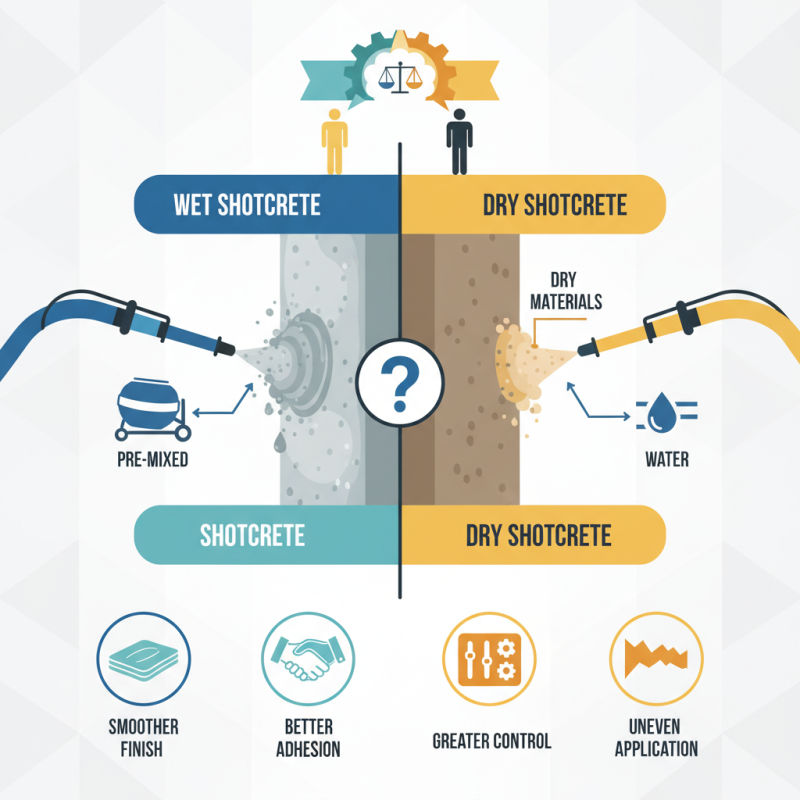
Understanding the Basics of Shotcrete: Wet vs. Dry Methods
Understanding the Basics of Shotcrete: Wet vs. Dry Methods
Shotcrete is a widely used technique in construction. It involves the application of concrete at high pressure. This process can occur in two main forms: wet and dry. The difference lies in the moisture content and application method.
In the wet method, a pre-mixed concrete slurry is pumped through a hose and sprayed onto a surface. This approach allows for a more uniform application. The American Concrete Institute states that wet shotcrete can yield compressive strengths up to 6,000 psi, significantly improving structural integrity.
In contrast, the dry method involves dry cement and aggregates being delivered through a hose. Water is added at the nozzle. This technique is less dependent on equipment settings. However, it may lead to a less consistent finish. According to industry research, the dry method generally allows for greater material control. However, it can produce a dustier environment. Users often report difficulties with adhesion and finishing in dry applications. Both methods have their advantages and specific use cases, sometimes leading to unexpected challenges on-site.
Proper evaluation of each method is essential. Site conditions, project specifications, and desired outcomes influence the choice. Stakeholders must consider factors such as strength requirements, environmental conditions, and labor expertise. This careful consideration can minimize potential issues during application. Ultimately, understanding each method's mechanics enhances the effectiveness of shotcrete.
Key Characteristics of Wet Shotcrete Technology
Wet shotcrete technology plays a vital role in modern construction and rehabilitation projects. Its key characteristics make it distinct from dry shotcrete. Wet shotcrete involves pre-mixing cement, aggregates, and water before spraying. This ensures a consistent mix and better adhesion. The moisture content allows for a smoother application and enhances the workability.
One of the main benefits of wet shotcrete is its ability to reduce dust and rebound during application. The controlled environment minimizes the risk of health hazards for workers. However, it is crucial to monitor the mixing process carefully. Excess water can lead to weaker structures. Ensuring the correct water-to-cement ratio is essential for structural integrity.
Another aspect to consider is the curing process. Wet shotcrete requires specific conditions for curing to achieve maximum strength. Improper curing can result in cracking or insufficient strength. Awareness of these issues is key to utilizing wet shotcrete effectively. Despite its advantages, the technology needs thorough understanding and practice to ensure quality results in construction projects.
Analyzing Dry Shotcrete Application Techniques and Advantages
Dry shotcrete application techniques have gained significant traction in the construction industry. Unlike wet shotcrete, dry shotcrete involves the mixing of dry materials at the nozzle. This method ensures better control over material composition. It typically leads to reduced waste, with some estimates suggesting that it can decrease material waste by up to 30%. Properly executed, dry shotcrete can provide superior adhesion to surfaces.
One of the notable advantages of dry shotcrete is its faster setting time. Reports indicate that structures using dry shotcrete can experience curing times reduced by 25%. This expedited process benefits projects requiring tight deadlines. However, mastery of equipment is necessary to achieve optimal results. Misjudging the water content can lead to issues such as poor bonding and surface cracks. Attention to detail during application is crucial.
Additionally, industry studies highlight the importance of operator training. Skilled operators can ensure consistent material flow and effectiveness. A lack of training may result in uneven application, undermining the technique's benefits. As dry shotcrete continues to evolve, ongoing research and development are essential for improving methods and outcomes. Exploring innovative approaches will be vital for enhancing efficiency and reliability in future projects.
Comparative Performance: Wet versus Dry Shotcrete in Construction Projects
In construction projects, the choice between wet and dry shotcrete can significantly affect performance and durability. Wet shotcrete involves mixing materials with water before application. This process allows for better adhesion and reduces dust. In contrast, dry shotcrete uses a dry mix, which is combined with water at the nozzle. This method is often faster. However, it can lead to more rebound, which is material that doesn't adhere to the surface.
Tip: Choosing the right method depends on your project needs. For vertical surfaces, wet shotcrete may provide a smoother finish. Dry shotcrete can excel in projects requiring rapid application, such as tunnel linings.
It's essential to consider environmental factors too. Wet shotcrete may be less effective in cold weather due to freezing risks. On the other hand, dry shotcrete can be challenging in humid conditions, leading to inconsistent results. Be aware of these conditions when selecting your approach. Reliable performance hinges on understanding these subtleties.
Tip: Test samples from each method can provide insights. Observing how each mix behaves under specific conditions helps refine your choice. Reflecting on past projects can lead to improved decisions in future endeavors.
Industry Standards and Best Practices for Shotcrete Applications
When discussing shotcrete applications, understanding the industry standards is crucial. The two main types of shotcrete are dry and wet mix. Each method has its own characteristics and applications, which makes it important to know how to distinguish between them. A common misconception is that dry shotcrete is always suitable for all projects.
However, environmental conditions can greatly impact its performance.
Wet shotcrete is often preferred for larger projects. It allows for better adhesion and reduces dust. This method also minimizes water loss, which is vital in colder climates. Proper mixing and application techniques are essential to achieve the desired consistency.
Meanwhile, dry shotcrete is more practical for small repairs and overhead applications. It is efficient but requires careful handling.
Practitioners must continually evaluate their methods. Even seasoned professionals can make mistakes in mix ratios or application speed. Following industry standards, such as those from ACI or ASTM, can help mitigate risks. Regular training and assessment should be part of any team's routine.
The growth of technology in shotcrete application is promising. Yet, practitioners should remain critical of their processes to ensure the highest quality work.
FAQS
: Shotcrete is a construction technique for applying concrete under high pressure.
The two main methods are wet shotcrete and dry shotcrete.
Wet shotcrete uses pre-mixed concrete slurry pumped through a hose for application.
Dry shotcrete can lead to less consistent finishes and a dustier work environment.
Skilled operators ensure consistent material flow, preventing uneven applications and potential issues.
Misjudging water content may cause poor bonding and surface cracks in applications.
Wet shotcrete can yield compressive strengths up to 6,000 psi, enhancing structural strength.
Factors include site conditions, strength requirements, and labor expertise.
Yes, dry shotcrete can decrease material waste by up to 30% when applied correctly.
Dry shotcrete can reduce curing times by 25%, which is beneficial for tight project deadlines.
Conclusion
In the article titled "2026 How to Distinguish Between Wet and Dry Shotcrete?", key insights are provided to clarify what is the difference between wet and dry shotcrete. The discussion first establishes the fundamental principles behind both methods, highlighting their unique characteristics. Wet shotcrete is delivered in a premixed form, allowing for a smoother application and better hydration, while dry shotcrete is mixed on-site, offering advantages in situations requiring immediate use.
The article further delves into the application techniques of each method, analyzing their respective advantages in construction projects. Comparative performance assessments illustrate scenarios where one method may outperform the other, emphasizing considerations like structural strength and cost-effectiveness. Finally, industry standards and best practices are outlined, ensuring that professionals understand the optimal use of both wet and dry shotcrete in various construction contexts.

 SSG Machinery