Operating a shotcrete machine safely requires more than starting the engine and pulling the trigger. It demands practical training, equipment knowledge, and disciplined communication. This guide explains how to operate a shotcrete machine safely when using equipment manufactured or supplied from China. It focuses on preparation, pressure control, concrete delivery, nozzle handling, and shutdown procedures.
Before work begins, operators should study the Chinese manufacturer’s manual, confirm local requirements, and inspect every connection. Check the pump, air compressor, hoses, clamps, nozzle, emergency stop, and pressure gauges. A loose coupling can release wet concrete violently. Keep workers outside the spraying zone, especially near the nozzle and rebound area. Wear a helmet, eye protection, gloves, hearing protection, safety boots, and suitable respiratory protection. Concrete dust is not harmless.
Communication matters. Use clear hand signals or radio commands between the nozzle operator, pump operator, and batch crew. Maintain stable pressure and avoid sudden valve changes. The nozzle should remain controlled, while the operator watches the surface, hose movement, and material consistency. Blockages require isolation and pressure release before anyone touches the line. Never improvise with damaged hoses or unapproved replacement parts.
Small mistakes happen. Experienced crews still miss a worn clamp or misread a gauge. That reality deserves attention, not embarrassment. Stop the machine when conditions change, document faults, and ask a qualified technician for advice. Safe operation depends on verified procedures, competent supervision, and regular maintenance—not confidence alone.
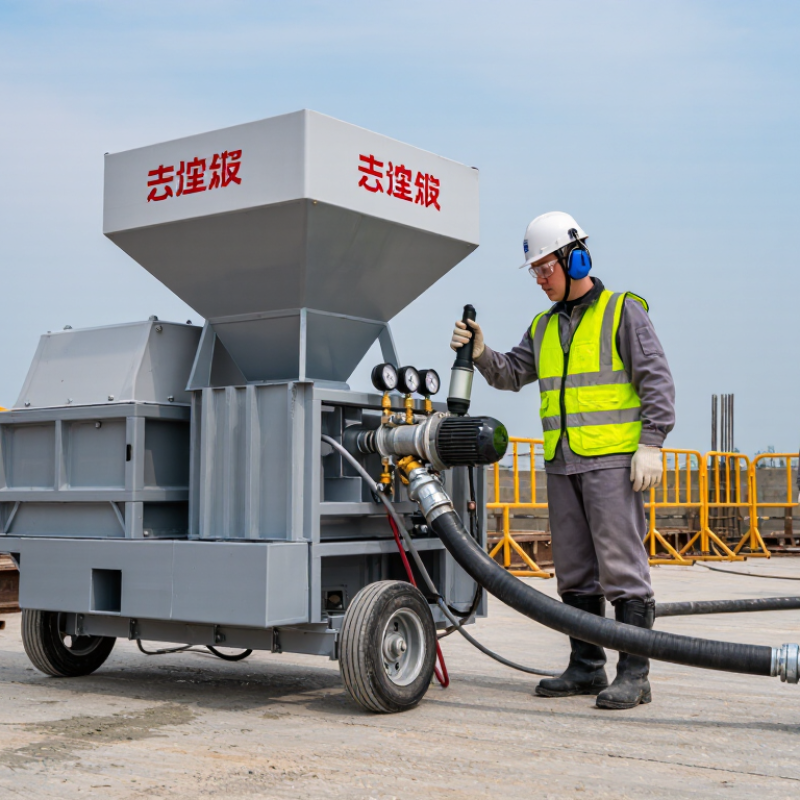
When operating a shotcrete machine supplied from China, identify every component before connecting power. Parts vary by model. Common components include the material hopper, rotor or screw feed system, air compressor, accelerator pump, delivery hose, and spray nozzle. Check the model-specific diagram carefully. Similar-looking fittings may have different pressure ratings. Trace each hose by hand, lock every coupling pin, and inspect gaskets for cuts or hardening. A damp hopper can cause sudden material pulsing.
The control panel needs equal attention. Locate the main isolator, emergency stop, start and stop controls, air-pressure regulator, feed-speed adjustment, and accelerator-rate control. Some machines use separate gauges for conveying air and atomizing air. Do not confuse them. Test the emergency stop with the machine unloaded. The rotor should move smoothly, while pressure stays within the manual’s stated range. Keep hands away from moving assemblies. I once focused too heavily on the nozzle and missed a partly closed air valve. That small oversight caused uneven material flow.
During spraying, one trained operator should control the panel while the nozzle worker maintains clear communication. Use agreed hand signals or a radio near pumps and compressors. Adjust feed speed slowly. Open the air valve gradually, then set accelerator dosage according to the approved mix and site procedure. Watch for hose kinks, unusual vibration, or rising pressure. Stop the system before clearing a blockage. Never inspect a pressurized line. Record pressure readings, worn seals, and control changes after each shift. My checks are not perfect, so a second person should verify isolation and component condition.
| Category | Component or Control | Primary Function | Typical Operating Information | Pre-Operation Check | Safe Operating Practice |
|---|---|---|---|---|---|
| Material Handling | Material Hopper | Receives dry-mix or wet-mix concrete before it enters the conveying system. | Capacity varies by machine configuration; the hopper should remain sufficiently filled to prevent air from entering the feed system. | Check for cracks, excessive wear, foreign objects, and properly fitted guards. | Keep hands, tools, and loose clothing away from the agitator and feed opening. Do not reach into the hopper while the machine is energized. |
| Material Handling | Agitator or Mixing Paddle | Maintains a consistent material flow and helps prevent bridging or blockage in the hopper. | Rotation is controlled by the machine drive system and must match the machine operating direction. | Verify that the paddle rotates freely and that protective covers are securely installed. | Stop the machine, isolate the power source, and release stored energy before removing a blockage. |
| Conveying System | Rotor, Pump, or Conveying Chamber | Moves concrete from the hopper into the delivery pipeline. | Dry-mix machines commonly use a rotor and sealing plates; wet-mix machines commonly use a concrete pump system. | Inspect wear parts, sealing surfaces, fasteners, and signs of material leakage. | Operate within the equipment manual's pressure and capacity limits. Never bypass interlocks or guards. |
| Conveying System | Delivery Hose or Pipeline | Transfers concrete from the machine to the spray nozzle. | Hose size, length, pressure rating, and couplings must be suitable for the concrete mix and machine output. | Check for cuts, bulges, abrasion, damaged couplings, missing safety pins, and loose clamps. | Never stand in front of a pressurized hose or point it toward people. Secure the hose against whipping. |
| Spraying System | Spray Nozzle | Combines the concrete stream with compressed air and, when required, accelerator at the application point. | Correct nozzle alignment and a steady spray distance are essential for uniform placement and reduced rebound. | Inspect the nozzle, air ring, material passage, accelerator connection, and nozzle holder. | Keep the nozzle aimed only at the intended surface. The nozzle operator must maintain clear communication with the pump operator. |
| Air System | Air Compressor and Air Regulator | Supplies compressed air for material projection, atomization, and nozzle operation. | Required air flow and pressure depend on nozzle size, hose length, material, and application method. | Drain moisture, inspect hoses and fittings, and confirm that the regulator and pressure gauge operate correctly. | Open air valves gradually. Do not disconnect air lines until pressure has been fully released. |
| Additive System | Accelerator Pump and Dosing Control | Injects a controlled amount of accelerator into the concrete stream when specified by the approved mix design. | Dosing rate must be set according to the accelerator manufacturer's instructions and the approved shotcrete procedure. | Check the chemical tank, suction tube, pump, calibration, hoses, and leakage points. | Wear chemical-resistant gloves, eye protection, and protective clothing. Prevent incompatible chemicals from mixing. |
| Power System | Electric Motor or Diesel Engine | Provides power to the conveying, mixing, hydraulic, and auxiliary systems. | Power source, voltage, fuel, and rated output must match the machine specification and site supply. | Inspect cables or fuel lines, grounding, fluid levels, ventilation, and abnormal leakage. | Use a correctly rated electrical supply and residual-current protection where required. Keep exhaust gases away from enclosed work areas. |
| Control Panel | Main Isolator or Power Switch | Connects or disconnects the machine from its electrical power source. | Should be clearly marked and accessible to the operator or authorized maintenance person. | Confirm that the switch is functional and that the panel is dry, closed, and free from damage. | Set the switch to the off position before inspection, cleaning, adjustment, or maintenance. |
| Control Panel | Start and Stop Controls | Starts or stops the drive and material conveying system. | Starting sequence should follow the machine manual, normally including air, material, and additive systems as applicable. | Test the controls without material where permitted and confirm that the stop command interrupts operation. | Keep the emergency stop accessible. Do not restart until the cause of an unexpected stop has been identified. |
| Control Panel | Emergency Stop Button | Immediately stops hazardous machine movement or material conveying during an emergency. | Usually uses a red, mushroom-shaped button with a maintained stop position. | Test the emergency stop according to the site procedure before production begins. | After activation, isolate the machine and investigate the hazard before resetting or restarting. |
| Control Panel | Material Output Control | Adjusts the quantity or rate of concrete delivered to the hose. | Output should be adjusted gradually to suit the nozzle capacity, mix consistency, and application thickness. | Confirm that the control responds smoothly and that the selected range is suitable for the work. | Avoid sudden increases that may cause hose movement, excessive rebound, blockages, or loss of nozzle control. |
| Control Panel | Air Pressure Control and Gauge | Regulates and displays compressed-air pressure supplied to the spraying system. | Pressure must remain within the machine and hose ratings and be adjusted to actual spraying conditions. | Verify gauge readability, regulator operation, and absence of air leaks. | Never exceed the lowest pressure rating of any connected hose, fitting, nozzle, or accessory. |
| Control Panel | Pressure Gauge or Pressure Sensor | Indicates conveying or hydraulic pressure and helps identify abnormal resistance or blockage. | A rapid pressure increase can indicate a blocked hose, nozzle, valve, or conveying chamber. | Check that the gauge returns to zero when the system is depressurized. | If pressure rises abnormally, stop material feed and follow the approved depressurization procedure. Do not loosen couplings under pressure. |
| Safety System | Protective Guards and Interlocks | Prevent access to rotating, crushing, electrical, and other hazardous parts. | Guards and interlocks must remain installed and functional during operation. | Inspect guard fasteners, access doors, switches, and warning labels. | Never operate the machine with guards removed, doors open, or interlocks defeated. |
| Safety System | Grounding and Electrical Protection | Reduces the risk of electric shock and limits damage from electrical faults. | Protection should include suitable grounding and correctly rated overcurrent or residual-current devices. | Verify the grounding conductor, plugs, cables, connectors, and protection devices before connection. | Keep electrical equipment away from standing water. Only qualified personnel should repair electrical faults. |
| Maintenance | Lubrication Points and Service Access | Reduce wear on bearings, drive components, seals, and moving parts. | Lubricant type, quantity, and service interval must follow the equipment maintenance schedule. | Look for dry bearings, excessive grease, contamination, leaks, or unusual noise. | Stop, isolate, and secure the machine before lubrication or service. Keep lubricants away from concrete and chemical additives. |
| Operator Safety | Personal Protective Equipment | Protects workers from rebound, dust, noise, chemical exposure, compressed air, and impact hazards. | Typical protection includes a hard hat, safety glasses or face shield, hearing protection, gloves, safety footwear, and suitable respiratory protection. | Inspect PPE condition and confirm that respiratory protection matches the site exposure assessment. | Use additional chemical-resistant protection when handling accelerators or cleaning agents. |
| Operating Procedure | Start-Up Sequence | Brings the machine into service in a controlled order and reduces the risk of blockage or uncontrolled discharge. | Typical sequence: inspect the machine, confirm communication, start utilities, prime or wet the system as required, then introduce material gradually. | Confirm the work zone is clear, hose is secured, emergency stop is reset, and all operators understand the signals. | Start at low output and increase progressively while monitoring pressure, air flow, hose movement, and spray quality. |
| Operating Procedure | Shutdown and Depressurization | Stops material delivery and removes stored pressure before cleaning or maintenance. | Sequence depends on the machine type and material; the system must be flushed or cleaned using the approved procedure. | Confirm that the material feed has stopped and all pressure indicators have returned to a safe reading. | Isolate power, close air and additive supplies, release pressure, and verify zero energy before disconnecting any line. |
| Worksite Control | Communication and Exclusion Zone | Coordinates the nozzle operator, machine operator, compressor operator, and other workers. | Communication may use agreed hand signals, radios, or a dedicated spotter where visibility is restricted. | Establish an exclusion zone around the nozzle, hose, hopper, and machine before spraying. | Only authorized personnel may enter the operating area. Stop spraying when communication is lost or visibility becomes unsafe. |
Locate the hopper, rotor or screw feeder, compressor, accelerator pump, delivery hose, and nozzle. Check the model diagram. Similar fittings may have different pressure ratings.
Trace each hose by hand. Lock every coupling pin and tighten each clamp. Inspect gaskets for cuts or hardened rubber. A damp hopper may cause pulsing.
Find the isolator, emergency stop, start and stop controls, pressure regulator, feed adjustment, and accelerator control. Keep conveying-air and atomizing-air gauges separate.
Test the emergency stop with the machine unloaded. Confirm smooth rotor movement and acceptable pressure. Keep hands away from moving parts. Never rely on appearance alone.
Wear a helmet, eye protection, gloves, hearing protection, safety boots, and suitable respiratory protection. Keep untrained people outside the spraying area.
Hold the nozzle with both hands on stable ground. Aim nearly perpendicular to the surface, usually from 0.8 to 1.5 meters away. Use smooth circular movements.
Stop and investigate the system. Watch for kinks, unusual vibration, dust, rebound, or uneven buildup. If communication fails, stop immediately.
Stop the pump and release all pressure before inspection. Never stand in front of the nozzle or inspect a pressurized hose. Follow the manual’s shutdown procedure.
Remove loose material, standing water, and contamination first. Start with low output, then increase it slowly. Clean residue while soft and record pressure changes.
One operator may miss a partly closed valve or hose vibration. A second person can check isolation, hose condition, and the emergency-stop area. My checks are not perfect.
Learning how to operate a shotcrete machine safely begins with understanding its main components, control functions, material flow, and emergency shutoff procedures. Before starting, inspect the machine, hoses, nozzle, air lines, concrete delivery system, work area, and materials for damage, blockages, contamination, or instability. Confirm that all operators wear suitable personal protective equipment, including eye, hearing, respiratory, hand, foot, and head protection. Secure the hoses, check connections, establish reliable air supply, and ensure the concrete mix is prepared according to the project requirements.
During spraying, maintain clear communication with the nozzle operator and machine operator, keep a stable stance, and direct the nozzle safely while controlling pressure and material flow. Never point the nozzle at people or approach pressurized equipment without proper isolation. After work, stop the material and air systems in the correct sequence, release residual pressure, clean the hopper, hoses, nozzle, and delivery lines, and inspect the equipment for wear or damage. Proper shutdown and routine maintenance help prevent blockages, equipment failure, and injuries during future operations.

 SSG Machinery